

In the rapidly converging worlds of artificial intelligence and blockchain, token incentivized data labeling emerges as a pivotal mechanism for fueling AI crypto projects. Blockchain wallet labeling, in particular, demands precision to categorize transactions, identify user behaviors, and enhance on-chain analytics. Traditional centralized labeling falls short in scale and trust; enter decentralized platforms where crypto token rewards for labelers align incentives, ensuring high-fidelity AI crypto data annotation. This model not only democratizes data contributions but also fortifies the foundation for decentralized AI training data, drawing savvy investors to projects that blend utility with economic rigor.

Consider the blockchain's vast, opaque transaction ledgers. Labeling wallets accurately unlocks insights for risk assessment, fraud detection, and personalized DeFi services. Yet, manual annotation at this scale is cost-prohibitive and prone to errors. Token rewards flip the script: contributors worldwide compete for bounties, staking reputation alongside capital. From my vantage as a value investor, this structure mirrors disciplined capital allocation; poor performance yields penalties, rewarding only the consistent performers. Platforms like those in the updated 2026 landscape exemplify this shift, turning data scarcity into abundance.
Decentralized Platforms Pioneering Wallet Labeling
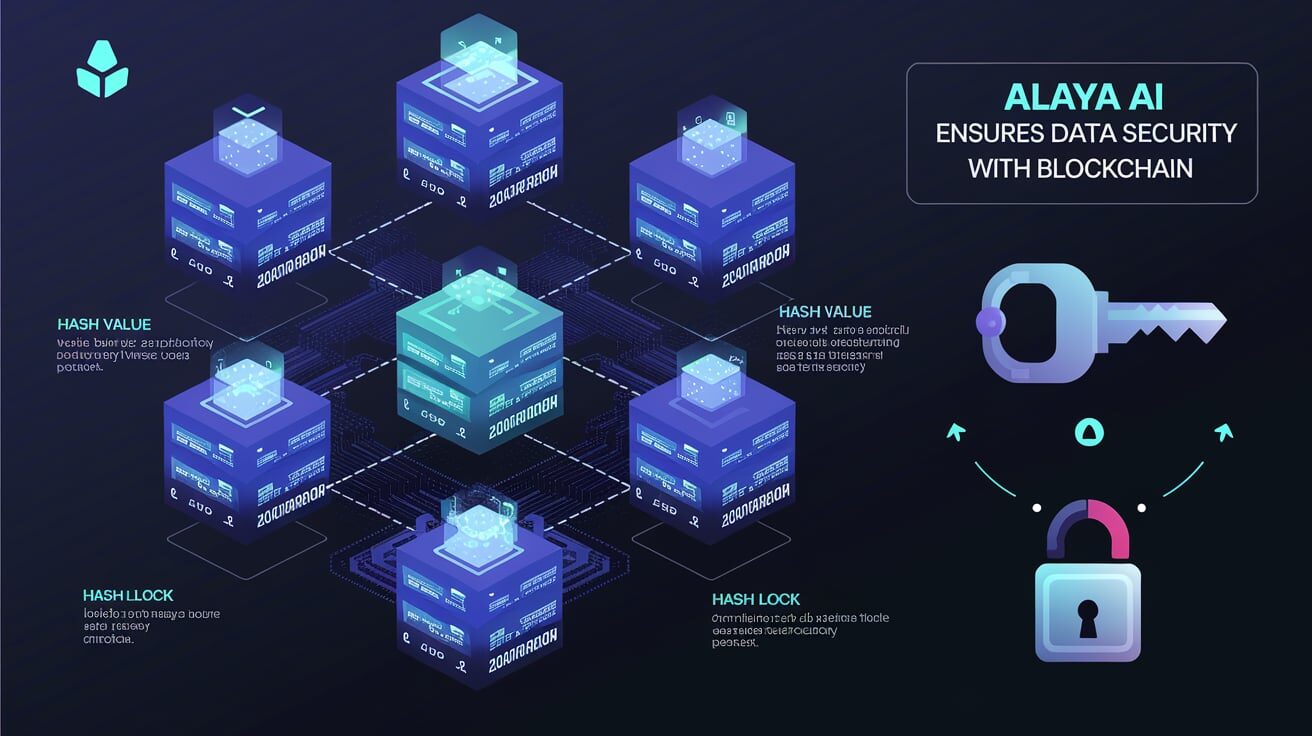
Bittensor (TAO) stands at the forefront, creating a marketplace where miners supply AI models trained on labeled blockchain data, earning TAO tokens proportional to their value. This isn't mere speculation; it's a meritocracy where superior labeling feeds into model sophistication, driving network effects. ChainLabel ($LABEL) narrows focus to smart contract data, incentivizing labelers with $LABEL for accuracy in categorizing wallet interactions. Governance via the token ensures community oversight, mitigating centralization risks. Alaya AI (ALA/AGT) adds gamification, blending tokens and NFTs to crowdsource multi-modal data, including wallet traces. These initiatives, rooted in verifiable on-chain reputation, outperform legacy methods by magnitudes in speed and verifiability.
Key Token Reward Benefits
- Scalability through global contributors: Token incentives enable worldwide participation in wallet labeling, as in Bittensor (TAO), where miners contribute AI models across the globe.

- Quality via staking and slashing: Staking mechanisms and penalties ensure accurate labeling; ChainLabel ($LABEL) rewards higher accuracy with more tokens, promoting reliable data.

- Economic alignment for sustained participation: Tokens create ongoing incentives, exemplified by Alaya AI (ALA/AGT), fostering a data economy with rewards and NFTs.
- Transparency in reward distribution: On-chain verification provides clear, auditable rewards, as utilized in AIT Protocol, the leading crypto data labeling project.

- Integration with DeFi for liquidity: Reward tokens enhance liquidity via DeFi protocols, aligning with projects like PublicAI's decentralized data platform.

Broader ecosystem players amplify this trend. PublicAI offers the largest decentralized hub for multi-modal annotation, while Sahara AI opens crowdsourcing to all developers. AIT Protocol, the largest dedicated labeling project since 2023, underscores maturity. Hivemapper's mapping success translates directly: token incentives yield superior geospatial data, a blueprint for wallet ecosystems. Investors should note; these aren't hype-driven tokens but utility bearers in decentralized AI training data pipelines.
Mechanics of Token Rewards in Practice
At core, blockchain wallet labeling involves classifying addresses by entity type - exchanges, whales, dApps - using heuristics and AI-assisted tools. Contributors stake tokens to participate, earning yields on correct labels verified by consensus or oracles. Accuracy gates rewards; disputes resolve via economic majority. This sybil-resistant design, akin to proof-of-stake, preserves capital while incentivizing diligence. In Alaya AI, NFTs unlock premium tasks, fostering loyalty. ChainLabel's model ties rewards to developer demand, creating a self-regulating market.
From an investment lens, evaluate tokenomics rigorously. Supply dynamics matter: inflationary rewards bootstrap networks, but vesting cliffs prevent dumps. Bittensor's value accrual to miners signals strength; monitor adoption metrics like labeled wallet volume. Risks persist - oracle failures or label collusion - yet on-chain verifiability mitigates them better than off-chain alternatives. Top AI crypto tokens in 2025, per ChainUp, highlight this synergy, with projects leveraging real-time blockchain analytics via labeled data.

Economic Incentives Fueling AI-Blockchain Synergy
On-chain AI agents, transforming Web3 wallets as noted in recent analyses, rely on labeled data for real-time signals. Token rewards bridge the gap, turning passive holders into active labelers. OpenLedger's token-aligned model rewards node operators for verification, bootstrapping trustless supply chains. Perle Labs and Nous exemplify crypto-powered decentralized training, where wallet labeling feeds agent intelligence. This isn't altruism; it's rational self-interest, where contributors capture alpha from data economies.
Projects like PublicAI and Sahara AI extend this paradigm, providing vast infrastructures for AI crypto data annotation across modalities, with contributors earning real rewards on-chain. Hivemapper's proven model in mapping data offers a compelling parallel; its token incentives have generated geospatial datasets of unmatched fidelity, suggesting similar outcomes for blockchain wallet labeling. As a value investor, I see these as compounding assets: early participants in robust tokenomics reap sustained yields, much like compounding dividends in traditional equities.
Comparative Analysis of Leading Projects
To discern true value, compare the mechanics across frontrunners. Bittensor incentivizes broad AI model contributions, with wallet labeling as a foundational input. ChainLabel specializes in smart contracts, demanding niche expertise rewarded handsomely in $LABEL. Alaya AI's gamified approach lowers barriers, attracting diverse labelers while NFTs confer ongoing utility. AIT Protocol scales this to enterprise levels, its 2023 launch proving rapid traction. Each tailors crypto token rewards for labelers to specific pain points, yet all converge on decentralized verification to uphold quality.
Comparison of Top Token-Incentivized Wallet Labeling Projects
| Project | Token | Core Focus | Reward Mechanism | Key Strength |
|---|---|---|---|---|
| Bittensor | TAO | AI models on blockchain data | Value-based mining | Network effects |
| ChainLabel | $LABEL | Smart contracts | Accuracy staking | Developer demand-driven |
| Alaya AI | ALA/AGT | Crowdsourced multi-modal | Tokens and NFTs gamification | User ownership |
This table underscores a critical insight: diversity in focus breeds resilience. No single project monopolizes; instead, they form an interoperable ecosystem. Investors favoring capital preservation should prioritize those with deflationary pressures or buyback mechanisms, echoing bond ladders over speculative bets.
Risks, Mitigations, and Long-Term Value
Yet discipline demands scrutiny of pitfalls. Label quality hinges on oracle reliability; faulty inputs cascade into flawed AI agents. Collusion among staked labelers poses sybil threats, though slashing penalties deter it. Market volatility amplifies risks for tokens like TAO, where adoption lags could pressure prices. Mitigation lies in layered consensus - Bittensor's peer validation, ChainLabel's governance votes - fortifying against single points of failure. From my 15 years managing portfolios, this mirrors diversification: allocate across projects, weighting by labeled data volume and burn rates.
Regulatory shadows loom too. As AI crypto tokens proliferate, clarity on securities classification will shape trajectories. Still, blockchain's transparency offers a moat; verifiable contributions sidestep off-chain disputes. PublicAI's multi-modal scale and OpenLedger's node rewards signal maturing infrastructure, positioning token incentivized data labeling as infrastructure, not froth.
Zooming out, on-chain AI agents analyzing Web3 wallets - powered by precise labeling - herald transformative signals for DeFi and beyond. Galaxy's insights on Nous and Prime Intellect reveal crypto's role in open AI training, with wallet data as the linchpin. Contributors, rewarded transparently, build moats of reputation capital, convertible to liquidity via DeFi integrations.
For the patient investor, this intersection offers asymmetric upside. Scout projects with audited tokenomics, rising annotation throughput, and integrations like those in ChainUp's top AI tokens for 2025. Stake claims early in decentralized AI training data pipelines; the compounding from accurate, incentivized labeling will reward those who endure market cycles. In an era where data is the new oil, token-driven extraction ensures supply meets surging AI demand, preserving and growing capital over horizons measured in years, not quarters.




No comments yet. Be the first to share your thoughts!