

The shift to decentralized annotation
AI developers are rapidly moving away from centralized crowdsourcing toward token-incentivized platforms to solve the scaling bottleneck of training data. Traditional models rely on static, upfront payments that struggle with quality control at massive scale. By integrating ERC-20 tokens into the annotation workflow, platforms create a trustless environment where micropayments align incentives between data providers and developers.
This structural shift addresses critical inefficiencies in legacy systems. Centralized platforms often suffer from high overhead and limited Sybil resistance, allowing bad actors to inflate labor costs without contributing value. Decentralized alternatives use consensus mechanisms to verify annotation quality before releasing token rewards. This ensures that developers pay only for validated, high-integrity data, reducing the cost per labeled sample while maintaining rigorous standards.
The economic model transforms data labeling from a fixed cost into a dynamic market. Token incentives allow for real-time adjustment of task difficulty and compensation, attracting specialized annotators who might otherwise ignore low-volume requests. This liquidity is essential for training next-generation large language models, which require continuous, diverse, and verifiable datasets.
Market sentiment for AI infrastructure tokens reflects this underlying utility demand. As seen in the performance of leading AI crypto assets, investor interest is increasingly tied to tangible use cases like decentralized data markets. The correlation between token valuation and actual data throughput highlights the maturation of these platforms from speculative assets to essential infrastructure components.
Leading platforms for token-based labeling
The decentralized data labeling market has moved beyond experimental prototypes to platforms with functional tokenomics and active user bases. These systems replace static freelance contracts with dynamic, on-chain reward mechanisms, aligning the incentives of data vendors with human annotators. The primary value proposition lies in reducing Sybil attacks through cryptographic identity verification while enabling micropayments that are economically viable at scale.
Two distinct architectural approaches currently dominate the landscape. The first utilizes Ethereum-compatible ERC-20 tokens, leveraging established DeFi infrastructure for stable value transfer and governance. The second, represented by newer entrants, leverages Solana’s high throughput to facilitate near-instant micropayments, addressing the friction often associated with gas fees on legacy chains. Both models aim to solve the data quality bottleneck that constrains large language model training.
The following comparison outlines the key technical and economic differences between the leading platforms. This analysis focuses on token standards, reward mechanisms, and the specific data modalities each platform supports.
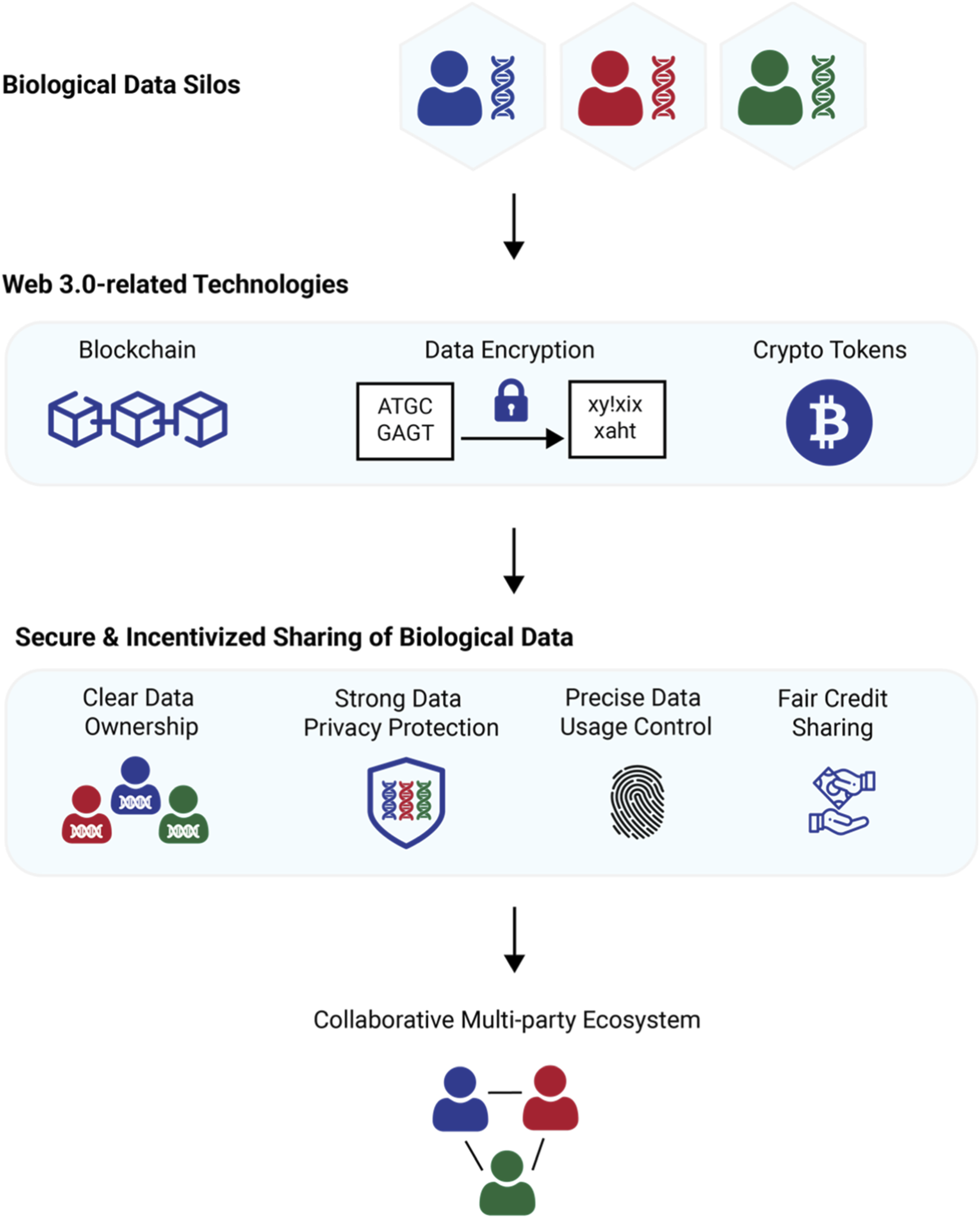
Sapien represents the most mature example of an ERC-20 integrated labeling platform. Its SPN token is not merely a reward currency but a governance and staking asset. Labelers stake SPN to increase their reputation score, which directly influences their weight in consensus decisions. This mechanism, described in their official documentation, creates a self-policing ecosystem where accurate labeling is financially incentivized, and Sybil attacks are economically prohibitive due to the cost of acquiring and staking significant token volumes.
Deano, showcased at ETHGlobal, offers a more direct approach to token incentives. Participants earn DAN tokens for accurate annotations without the complex staking layers found in Sapien. This model appeals to annotators seeking immediate liquidity, though it places heavier reliance on community-driven consensus for quality control. The platform’s transparency is maintained through on-chain records of all labeling actions, providing an immutable audit trail for data vendors.
Newer platforms leveraging Solana address the scalability limitations of Ethereum by utilizing SPL tokens for micropayments. A recent study published on TechRxiv highlights how Solana’s high throughput allows for granular rewards per annotation, a model that is often cost-prohibitive on ERC-20 chains due to gas fees. These platforms typically focus on high-volume data types like image and video labeling, where the sheer number of annotations requires a low-friction payment rail.
The choice of platform depends heavily on the data modality and the required level of quality assurance. For text-based AI training, Sapien’s reputation-weighted model offers superior noise reduction. For high-volume visual data, Solana-driven micropayment platforms provide the economic efficiency necessary to scale labeling efforts without incurring prohibitive transaction costs.
Tokenomics and Quality Control
The core tension in token-incentivized data labeling is the conflict between volume and accuracy. When rewards are tied to task completion, participants may prioritize speed over precision, leading to low-quality annotations. To solve this, platforms deploy smart contracts that enforce strict quality gates before releasing payments. These mechanisms rely on consensus algorithms and Sybil resistance to ensure that only verified, high-quality contributions are compensated.
Consensus and Verification
Most platforms do not rely on a single annotator’s output. Instead, they use a consensus model where multiple workers label the same data point. The system only accepts the label if a threshold of agreement is reached. This redundancy filters out random errors and malicious noise. For example, if three annotators label an image and two agree, the contract accepts that label. If the votes are split, the task is escalated to a senior reviewer or a specialized verification oracle. This approach mirrors the Byzantine Fault Tolerance principles used in blockchain consensus, ensuring data integrity without a central authority.
Sybil Resistance and Identity
A major risk in decentralized workforces is the Sybil attack, where a single actor creates multiple fake identities to farm rewards. To prevent this, platforms implement identity verification layers. Some require Proof-of-Humanity protocols, while others use staking mechanisms where annotators must lock up tokens as collateral. If their work is found to be fraudulent, the staked tokens are slashed. This economic disincentive aligns the worker’s financial interest with the platform’s need for quality. It transforms the labeling process from a simple gig-economy task into a trustless, auditable system.
Micropayments and Reward Structures
Reward distribution is handled via micropayments executed on-chain. These payments are often tiered based on the worker’s historical accuracy score. High-performing annotators receive higher rates and access to more complex tasks, creating a meritocratic hierarchy. This dynamic encourages continuous improvement and reduces the cost of quality control. The transparency of on-chain records allows anyone to audit the reward distribution, ensuring that the tokenomics remain fair and sustainable.
The effectiveness of these systems depends on the balance between incentive and oversight. Too little oversight leads to noise; too much oversight centralizes the process, defeating the purpose of decentralization. Successful platforms find the sweet spot by automating verification through consensus and using economic penalties to deter fraud.
Integrating decentralized data into AI pipelines
Developers must bridge the gap between on-chain data acquisition and traditional ML workflows. The primary challenge lies in tokenization of the training data itself, ensuring that the labels provided by distributed annotators are cryptographically verifiable before ingestion. This requires building robust API layers that can handle the asynchronous nature of decentralized consensus and micropayments.
Most leading platforms offer RESTful APIs or WebSocket endpoints designed for high-throughput data streaming. These interfaces typically return data in standard formats like JSON or Parquet, compatible with libraries such as Hugging Face Datasets or PyTorch DataLoaders. The integration process involves authenticating via wallet signatures, fetching labeled batches, and applying on-chain verification checks to filter out low-quality or Sybil-resistant noise.
The reliability of the pipeline depends heavily on the platform's consensus mechanism. Unlike centralized databases, decentralized labeling relies on multi-signature verification and staking penalties to ensure data integrity. Developers should prioritize platforms with transparent audit trails, allowing the ML engineer to trace each data point back to its originator and validation score.
No comments yet. Be the first to share your thoughts!