
Set up the smart contract foundation
Before deploying the labeling interface, establish the economic layer governing value exchange. This foundation requires an ERC-20 token contract for rewards and a core smart contract enforcing labeling rules. These contracts define immutable logic, ensuring fair compensation and dataset integrity.
Follow this sequence to deploy the necessary contracts on your target blockchain network.
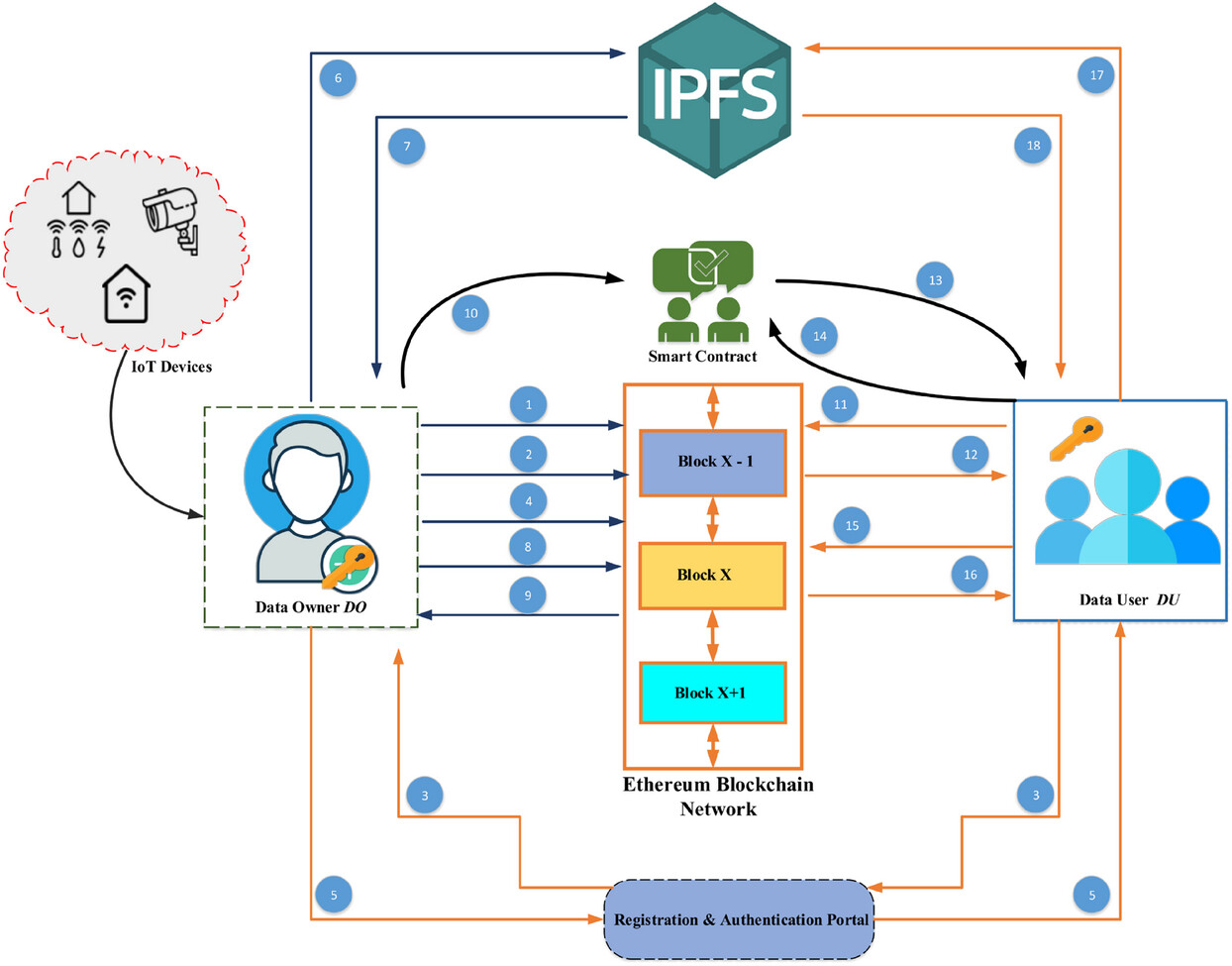
Deploy a standard ERC-20 token contract to serve as the incentive mechanism. Define total supply, decimals, and transfer functions carefully. This token becomes the currency for paying contributors. Adhering to official ERC-20 specifications ensures compatibility with wallets and exchanges.
Deploy the core smart contract managing the labeling workflow. This contract holds token rewards and distributes them based on verified work. Include functions to submit labels, verify accuracy, and claim rewards. The logic must prevent double-spending and ensure only valid labels are paid for, acting as the escrow and distribution engine.
Define the reward rate per label and maximum payout limits within the governance contract or configuration module. Ensure the reward structure is sustainable based on your token economics. Overly generous rewards cause inflation, while too-low rewards fail to attract quality labelers. Test these values in a local environment before mainnet deployment.
Verify your contract source code on a block explorer like Etherscan after deployment. This transparency allows users and auditors to inspect the logic, confirming that deployed bytecode matches published source code. Verification is critical for trust in a token-incentivized system, reducing the risk of hidden malicious functions.
This technical setup creates the immutable rules of the labeling economy. By anchoring the system in verified smart contracts, you ensure incentives are transparent and enforceable. The next phase involves integrating this contract layer with the frontend interface for data submission.
Define quality metrics and reward tiers
To prevent spam and low-effort annotations, tie token payouts directly to data accuracy. Implement a tiered system where higher quality yields higher rewards, aligning annotator interests with vendor needs to ensure reliable model data.
Establish clear quality thresholds using a combination of automated checks and human review. Annotators consistently meeting high accuracy standards should be promoted to premium tiers, earning more tokens per task. Those falling below the baseline receive lower payouts or are removed from the pool.
| Quality Tier | Accuracy Threshold | Reward Multiplier | Review Method |
|---|---|---|---|
| Basic | 60-75% | 1.0x | Automated validation |
| Standard | 76-85% | 1.5x | Peer review |
| Premium | 86-95% | 2.0x | Expert review |
| Elite | >95% | 3.0x | Expert + Audit |
Dynamic adjustment is key. As noted in Web3 data annotation frameworks, token rewards can be adjusted based on data quality, creating a win-win for vendors and annotators [1]. This ensures that high-quality data is always prioritized and fairly compensated.
[1] https://www.chaincatcher.com/en/article/2155380
Launch the labeling interface for annotators
The frontend bridges complex blockchain logic and the human annotator. Build a clean, web-based interface that hides the technical friction of Web3. Non-technical workers should see a simple task queue, not a wallet dashboard.
1. Connect the wallet abstraction layer
Do not force annotators to manage private keys directly during the labeling process. Use account abstraction or social login solutions to create a seamless entry point. The interface should handle wallet creation and signing in the background, reducing the barrier to entry and allowing contributors to focus on data quality rather than cryptographic security.
2. Display tasks with clear instructions
Once connected, the interface must pull available labeling jobs from the smart contract. Each task should display the raw data (text, image, or audio) alongside explicit labeling instructions. Use visual cues to highlight the current step in the labeling process. Clear instructions reduce ambiguity, which is critical for maintaining high-quality labeled datasets.
3. Submit labels and verify on-chain
When an annotator completes a task, the interface should submit the label to the blockchain. Implement a confirmation step showing the transaction hash and expected token reward. This transparency builds trust, ensuring annotators see their work recorded immutably and their token incentives calculated correctly.
4. Handle gas fees and incentives
Most annotators do not want to pay gas fees for every small task. Integrate a gas sponsorship mechanism where the platform covers transaction costs, or batch multiple submissions into a single transaction. Simultaneously, ensure the UI displays pending token rewards. This dual approach—removing costs while highlighting rewards—maximizes participation rates.
5. Test with a small cohort
Before launching to the public, run a beta test with a small group of annotators. Monitor the interface for usability issues, such as confusing navigation or slow loading times. Gather feedback on the clarity of instructions and the ease of submission. Iterate on the design based on this real-world data to ensure a smooth experience for the wider community.
Verify data quality through consensus
The verification phase filters out noise and rewards accuracy. Instead of relying on a single annotator, the workflow assigns each data point to multiple independent reviewers. This redundancy ensures that errors, bias, or malicious activity are caught before the dataset is finalized.
Assign tasks to multiple annotators
When a data item enters the pipeline, the smart contract distributes it to a quorum of annotators—typically three or five participants. Each annotator works independently without seeing the others' submissions. This isolation prevents groupthink and ensures that every label reflects an individual assessment of the data.
Compare labels using consensus algorithms
Once submissions are complete, the system compares the labels against each other. Consensus algorithms determine the final label based on agreement thresholds. If a majority agrees, the label is accepted. If results are split, the system may flag the item for a third-party auditor or request additional votes to break the tie. This process aligns with decentralized data labeling platforms that use blockchain architecture to resolve discrepancies [1].
Distribute rewards for verified accuracy
Annotators who contribute to a successful consensus receive their token rewards immediately. The smart contract automatically executes the payment, ensuring transparency and speed. If an annotator’s label contradicts the consensus without justification, they may forfeit their stake or receive a reduced payout. This mechanism dynamically adjusts rewards based on data quality, incentivizing precision over speed [2].
Flag low-quality data for review
Data points that fail to reach consensus are flagged for manual review. These items are removed from the high-quality dataset and sent to a senior annotator or expert validator. This step ensures that ambiguous or conflicting data does not corrupt the final model, maintaining the integrity of the training set.
The system distributes each data point to a quorum of independent reviewers, ensuring isolated assessments.
The smart contract compares submissions. A majority agreement finalizes the label; ties trigger additional votes or auditor review.
Annotators contributing to the consensus receive immediate token payouts. Inconsistent labels may result in forfeited stakes.
Items failing consensus are removed from the primary dataset and sent to expert validators for final resolution.
Avoid common pitfalls in tokenomics
Designing a token-incentivized data labeling workflow requires more than just attaching a cryptocurrency to a task list. The most frequent failure point is misaligning the token supply with the actual value of the labeled data. When the incentive structure is flawed, the ecosystem collapses under inflation or quality degradation. Treat the tokenomics as a core component of the data pipeline, not an afterthought.
Inflationary supply schedules
A common error is launching with a fixed, high emission rate that does not adjust for data volume or quality. If you mint tokens faster than the data is being consumed or utilized by models, the token price will crash. This devalues the rewards for honest labelers and attracts bad actors looking for quick flips rather than quality work.
Instead of a static schedule, implement a dynamic emission model. Tie the token release to the verified utility of the data. For example, reduce emissions when the dataset reaches a certain quality threshold or when the downstream model performance plateaus. This ensures the token remains scarce relative to its utility.
Ignoring data difficulty variance
Another critical mistake is applying a uniform reward rate to all labeling tasks. Not all data is created equal. Labeling a simple sentiment analysis task requires significantly less effort and expertise than bounding objects in complex medical imagery.
Implement a tiered reward system. Use a pre-labeled "gold standard" dataset to calibrate difficulty levels. Tasks that require higher accuracy or specialized knowledge should carry a higher token multiplier. This ensures that labelers are compensated fairly for the cognitive load and time investment required for complex annotations.
Insufficient quality controls
Token incentives alone do not guarantee quality. Without robust verification mechanisms, you risk flooding your dataset with low-effort or malicious labels. This is especially true if the reward is paid immediately upon submission without a review period.
Integrate a multi-layered quality assurance process. Use consensus mechanisms where multiple labelers annotate the same item, and only pay out when agreement is reached. Additionally, implement a reputation system where labelers with high accuracy scores receive better task assignments and potentially higher long-term rewards. This creates a self-correcting ecosystem that prioritizes precision over speed.
Checklist for launching your platform
Before going live, verify that your token-incentivized data labeling platform meets technical, economic, and operational standards. This checklist ensures the system is secure, scalable, and ready to attract labelers.
-
Smart Contract Audit: Have your ERC-20 token and reward distribution contracts been audited by a reputable firm? Unaudited contracts risk exploits that could drain the incentive pool.
-
Labeling Quality Mechanism: Is there a robust consensus or oracle mechanism (like the DDLP model) to verify label accuracy before rewards are released? Ensure the system penalizes low-quality contributions.
-
Onboarding Flow: Can a new user connect their wallet, view tasks, and submit labels without friction? Test the entire user journey on a testnet first.
-
Reward Distribution Logic: Verify that token rewards are distributed automatically and transparently via smart contracts. Avoid manual payouts to maintain trust and efficiency.
-
Data Privacy Compliance: Ensure all data handling meets GDPR or CCPA standards. Anonymize sensitive data before it reaches the labeling interface.
-
Community Guidelines: Publish clear rules for labelers, including acceptable use, dispute resolution, and reward calculation methods.
A well-structured pre-launch checklist minimizes risk and builds trust with early adopters.
No comments yet. Be the first to share your thoughts!