
What token-incentivized data labeling actually is
Token-incentivized data labeling replaces the traditional centralized employment model with a decentralized, token-based micro-reward system. In conventional AI training, human annotators are typically paid fixed salaries or hourly wages by a single entity. This structure often limits the scale of available talent to a specific geographic region or a limited pool of contracted workers. Token-incentivized platforms disrupt this model by allowing anyone with internet access to contribute data annotations in exchange for cryptocurrency tokens, usually ERC-20 standards.
This shift introduces a trustless environment where the mechanics of payment and verification are governed by smart contracts rather than manual HR processes. According to research published in IEEE Xplore, platforms like the Decentralized Data Labeling Platform (DDLP) leverage these token incentives to create a global, open market for data annotation. Developers and researchers can post labeling tasks, and contributors complete them to earn tokens, removing the need for intermediaries to manage payroll or verify individual identities for every small task.
The primary structural difference lies in the alignment of incentives. Instead of a fixed wage that may not correlate with output quality or volume, token rewards are often tied to the verification of work through consensus mechanisms or reputation systems. This economic layer encourages contributors to maintain accuracy, as their future earning potential depends on their standing within the network. It transforms data labeling from a static operational cost into a dynamic, scalable market resource.
The structural failures of centralized data labeling
Traditional AI training relies on centralized platforms that treat data labeling as a low-skill, high-volume task. This model creates a fundamental misalignment of incentives. Platforms prioritize speed and cost reduction, paying workers pennies per annotation. The result is a workforce with high churn rates and minimal motivation to ensure accuracy.
The economic structure discourages quality. When compensation is tied strictly to volume, labelers rush through complex tasks. Without meaningful financial stakes in the outcome, there is little recourse for correcting errors. This leads to inconsistent datasets that degrade model performance.
Research indicates that this approach fails at scale. Centralized systems struggle to maintain engagement because workers view the labor as disposable. The lack of long-term alignment means quality control becomes reactive rather than proactive.
To understand the alternative, it helps to look at how blockchain technology handles value. The incentive layer in blockchain rewards participants for maintaining the network honestly. Token-based models can apply this same principle to data annotation, aligning worker interests with data quality.
How ERC-20 and Solana drive quality
Token-incentivized data labeling relies on specific blockchain architectures to align the economic interests of labelers with the technical needs of AI models. By embedding smart contracts directly into the labeling workflow, platforms can automate verification and payment, removing the need for trusted intermediaries. This structural shift transforms data annotation from a cost center into a verifiable, market-driven service.
ERC-20 tokens provide the foundational standard for decentralized data labeling platforms (DDLP). As detailed in IEEE research, ERC-20 incentives create a trustless environment where developers and researchers can deploy labeling tasks without relying on centralized oversight. The token acts as a programmable unit of value that can be locked, released, or slashed based on the outcome of consensus mechanisms. This ensures that labelers are financially motivated to maintain high accuracy, as their rewards are directly tied to the validation of their peers.

While ERC-20 handles the token standard, Solana addresses the throughput and cost constraints inherent in high-volume labeling tasks. Labeling large datasets requires thousands of microtransactions, which can be prohibitively expensive on slower, higher-fee networks. Solana’s architecture enables transparent and efficient micropayments, allowing platforms to compensate labelers for individual annotations rather than bulk batches. This granularity allows for finer-grained quality control, where even minor discrepancies can be flagged and compensated in real time.
The combination of ERC-20’s standardization and Solana’s speed creates a robust incentive layer. IEEE studies on decentralized data labeling highlight that this infrastructure not only accelerates the labeling process but also enhances the overall quality of training data. By making the payment mechanism transparent and immediate, these blockchains ensure that high-quality contributions are consistently rewarded, driving a self-correcting ecosystem for AI development.
Real-world platforms using this model
Theoretical models only prove viable when market participants adopt them. Several projects have already integrated token incentives into their data labeling workflows, moving beyond whitepapers to actual deployment.
Sapien stands as the most prominent example. The platform raised $5 million to build a gamified data labeling experience where contributors earn crypto tokens for their work. By treating data annotation as a participatory economy rather than a passive task, Sapien attempts to solve the low-quality data problem at its source. Their approach relies on blockchain-based rewards to ensure labelers remain engaged and accurate, creating a direct feedback loop between effort and compensation.
Other initiatives are exploring decentralized marketplaces to democratize access. These platforms use smart contracts to automate payment distribution based on predefined quality conditions. This structure removes the middleman, allowing a global community of contributors to participate in AI training while ensuring they are paid fairly and promptly for verified work.
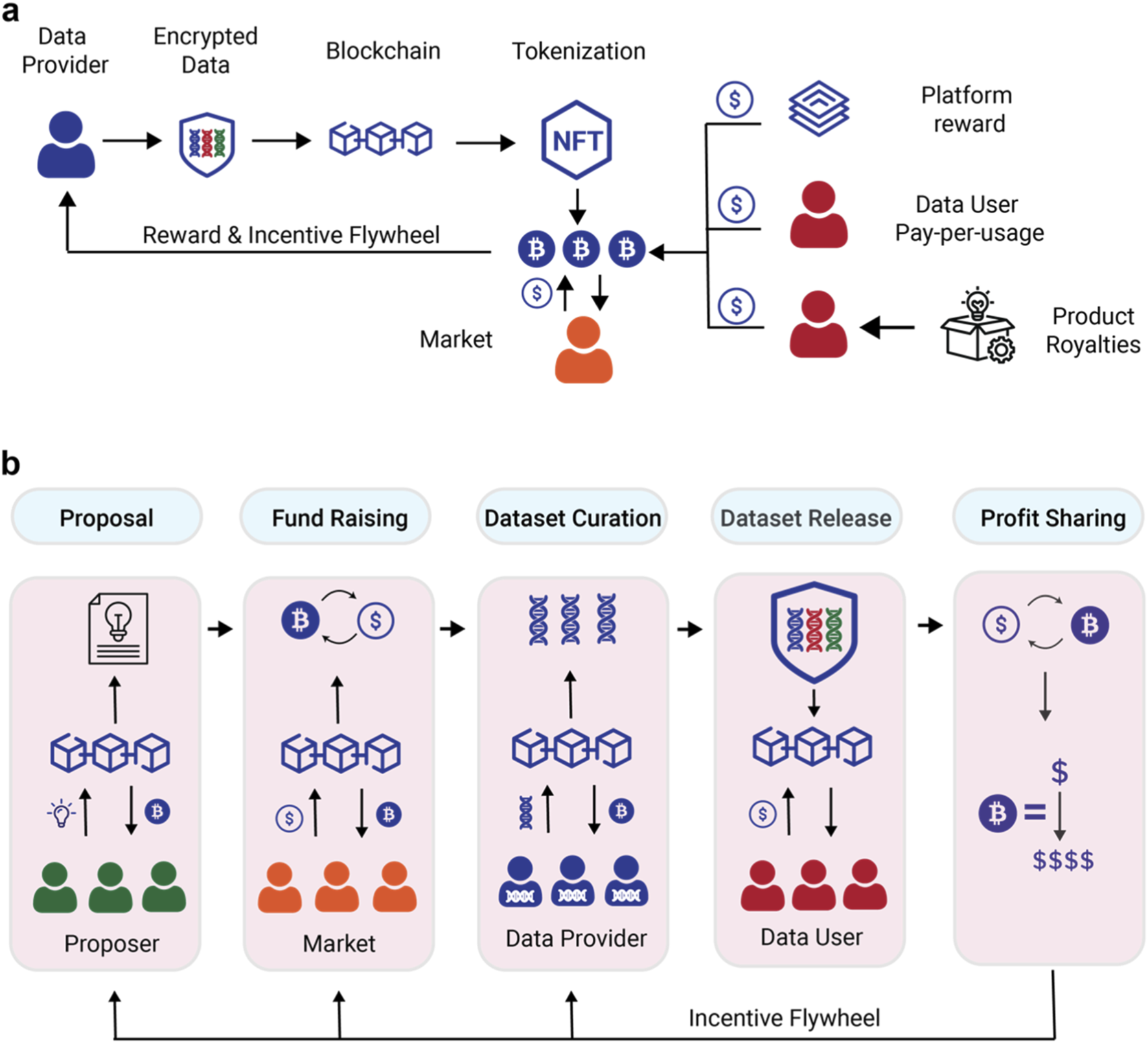
Challenges in Adoption and Tokenomics
Integrating token incentives into data labeling workflows introduces structural risks that extend beyond simple technical implementation. The primary obstacle is token volatility, which can destabilize the economic model if the reward mechanism is not carefully calibrated. When the value of the native token fluctuates significantly, the cost of labor becomes unpredictable for developers, and the earnings for labelers become unreliable. This instability discourages long-term participation from skilled annotators who require steady income streams, forcing projects to overcompensate with higher yields that may not be sustainable.
Regulatory uncertainty further complicates deployment, particularly in jurisdictions with strict securities laws. If a labeling token is deemed a security, the project faces compliance burdens that can stifle growth or lead to legal penalties. Projects must navigate a complex landscape where the distinction between a utility token and a financial asset is often blurred. Failure to structure the tokenomics to clearly demonstrate utility rather than investment potential can result in regulatory crackdowns, as seen in various decentralized social media initiatives where tokenized engagements drew scrutiny.
Designing a sustainable token economy also requires solving the "spam" problem. Without robust verification mechanisms, bad actors can generate low-quality or fabricated data to farm tokens. This creates a race to the bottom where quantity is prioritized over quality, degrading the dataset's value. Effective systems must implement reputation-based scoring or staking requirements to ensure that participants are economically invested in the accuracy of their work. As noted in research on blockchain-driven AI, token economic models must balance incentives to reward high-quality contributions while effectively addressing the low barriers to entry that often lead to abuse.
Projects that fail to account for token volatility and spam incentives often see rapid decay in data quality and user retention.
The path to adoption requires a shift from speculative tokenomics to utility-driven design. This means aligning the token's value directly with the verified quality of the labeled data, rather than mere volume. By prioritizing regulatory compliance and robust anti-spam measures, projects can build trust with both data scientists and annotators, creating a stable foundation for high-quality AI training.
No comments yet. Be the first to share your thoughts!