
Why token incentives change labeling economics
Traditional data labeling relies on fixed hourly wages or piece-rate payments that often disconnect annotator effort from data quality. Workers maximizing hourly earnings have little financial reason to spend extra time verifying edge cases, leading to inconsistent datasets that require expensive manual QA layers to correct.
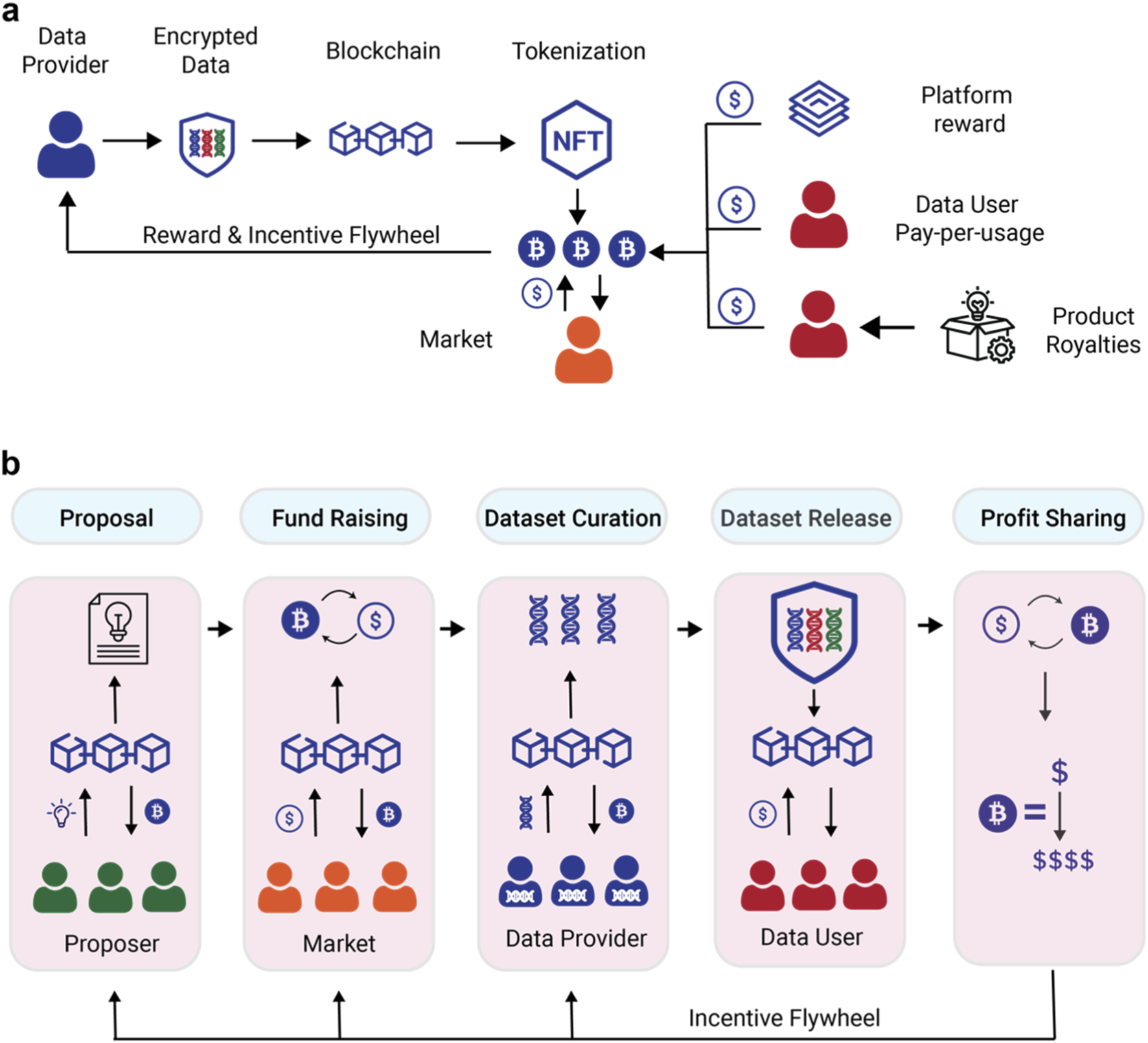
Token incentives restructure this dynamic by tying compensation directly to the verified quality of the output. When rewards are distributed via smart contracts, annotators are motivated to produce higher-quality work to avoid slashing penalties or to qualify for bonus multipliers. This shifts the cost model from paying for time to paying for verified utility.
This approach allows for dynamic reward adjustment based on real-time quality metrics. Platforms can instantly increase token rewards for difficult or rare data points, attracting specialized annotators without renegotiating contracts. The result is a more responsive labeling ecosystem where cost efficiency scales with data complexity rather than labor volume.
Calculate your labeling cost savings
Token-incentivized data labeling shifts the cost structure from fixed hourly wages to variable token rewards. This model often reduces overhead by aligning compensation with output quality rather than time spent. To see how this applies to your specific project, use the calculator below to compare traditional labeling expenses against a token-based approach.
The calculator assumes that token incentives improve accuracy, thereby reducing the need for expensive post-labeling quality assurance (QA). Platforms like Sapien use this mechanism to gamify the process, rewarding users for high-quality annotations rather than just volume. This approach can significantly lower your total cost of ownership for large-scale datasets.
Input your current hourly rates for human labelers and the total volume of data points you need processed. Include your standard QA overhead percentage, which typically ranges from 10% to 20% depending on your internal review processes.

Define the value of the token reward per label. This should reflect the market value of the token you plan to distribute. Adjust the expected accuracy boost based on industry benchmarks for gamified labeling tasks, which often show a 10-15% improvement in consistency.

Compare the total traditional cost against the token-based total. The calculator estimates potential savings by factoring in the reduced QA needs due to higher initial accuracy. Use this figure to justify the shift to stakeholders or to budget for your next labeling project.
Compare top token-incentivized platforms
Selecting the right token-incentivized data labeling platform requires balancing reward mechanics with the rigor of your quality assurance protocols. While traditional crowdsourcing relies on fiat micro-payments, these blockchain-native solutions use cryptographic tokens to align annotator interests with data accuracy. The table below compares three distinct approaches: a dedicated ETHGlobal project, a venture-backed gamified platform, and the broader academic framework of Decentralized Data Labeling Platforms (DDLP).
| Platform | Token / Reward | Quality Assurance | Funding / Status |
|---|---|---|---|
| Deano | DAN (ERC-20) | Community voting & smart contract validation | Open-source (ETHGlobal Showcase) |
| Sapien | SAPIEN (ERC-20) | Gamified leaderboards & reputation scoring | $5M Seed Round (Silicon Angle) |
| Generic DDLP | Variable (ERC-20) | Consensus mechanisms & staking | Academic / Research Framework (IEEE) |
Deano, showcased at ETHGlobal, utilizes a straightforward ERC-20 token model where community voting determines label validity. This approach reduces centralization risk but requires a mature community to self-police. Sapien takes a more commercial route, combining blockchain rewards with gamified reputation systems to drive higher accuracy for complex tasks. Their recent seed funding signals growing institutional confidence in this hybrid model.
The generic DDLP framework, often cited in IEEE research, relies on staking and consensus mechanisms. Annotators stake tokens to participate, losing them if their labels deviate from the majority consensus. This creates a high barrier to entry but significantly reduces malicious labeling, making it suitable for high-stakes biomedical or legal datasets where accuracy is paramount.
How ERC-20 tokens drive data quality
ERC-20 tokens serve as the primary incentive mechanism in decentralized data labeling, transforming data annotation from a passive task into a competitive, quality-driven process. Unlike traditional centralized platforms that pay flat rates regardless of output, blockchain-based systems use smart contracts to distribute tokens dynamically based on accuracy, consensus, or gamified metrics. This alignment of financial reward with data integrity significantly reduces fraud and improves model performance.
Smart Contract Distribution
The core of this system is the smart contract, which acts as an automated, trustless arbiter of quality. When an annotator submits a label, the contract doesn't immediately release payment. Instead, it holds the ERC-20 tokens in escrow until the submission passes verification. Verification typically involves comparison against a "gold standard" set of pre-labeled data or consensus from multiple independent annotators reviewing the same item. If the submission matches the expected output or achieves a threshold of agreement, the contract automatically releases the tokens to the annotator's wallet. If the submission is incorrect, the tokens are withheld, and in some models, a small penalty is deducted from the annotator's stake. This mechanism ensures that payment is strictly tied to verified value.
Consensus and Fraud Reduction
Fraud is minimized through a consensus-based verification layer. Rather than relying on a single supervisor, the system distributes each data item to multiple annotators. The smart contract compares these submissions; if a majority agree, the label is accepted. This makes it economically irrational for bad actors to submit incorrect data, as they would need to collude with a majority of other participants to cheat the system—a feat that is computationally and financially prohibitive. High-quality annotators build a reputation score on-chain, earning access to higher-value tasks and larger token rewards over time. This creates a self-reinforcing cycle where accuracy is directly correlated with long-term earnings, effectively filtering out low-effort or malicious actors.
Dynamic Reward Adjustment
Advanced platforms can also dynamically adjust token rewards based on the difficulty and quality of the data. For instance, labeling complex medical images or nuanced legal documents might yield a higher token payout than simple image classification. This dynamic pricing ensures that the most skilled annotators are incentivized to tackle the most challenging tasks, preventing the "race to the bottom" seen in gig-economy platforms where workers compete on speed rather than precision. By tying ERC-20 token distribution directly to these quality metrics, projects can achieve higher data fidelity at a lower overall cost compared to traditional outsourcing methods.
Risks and token volatility considerations
Token-incentivized data labeling shifts risk from the platform to the worker. While crypto rewards offer speed and borderless payments, they introduce significant volatility and regulatory ambiguity that can erase earnings overnight.
Price swings and income stability
The value of governance or utility tokens used for labeling tasks can fluctuate wildly. A worker earning 100 tokens when the price is $1.00 might find those same tokens worth $0.60 the next day due to broader market sentiment, not performance. This volatility makes accurate income forecasting nearly impossible for labelers who rely on these tasks as a primary income source. To mitigate this, some platforms offer stablecoin alternatives (USDC, USDT) for specific tasks. Workers should check if their rewards can be immediately converted to stable assets or if they must hold volatile tokens. Hedging strategies, such as using decentralized finance protocols, are generally too complex for casual data labeling participants.
Regulatory uncertainty
The legal status of token rewards varies by jurisdiction. In some regions, receiving tokens may be classified as taxable income at the time of receipt, regardless of whether the worker sells them. In others, the token might be viewed as a security, complicating the platform's ability to operate legally.
Workers should consult local tax guidelines regarding cryptocurrency and digital asset income. Platforms are increasingly adding tax reporting tools, but the ultimate responsibility for compliance often lies with the individual. Ignoring these regulations can lead to unexpected liabilities.
Platform solvency and tokenomics
Many token-incentivized platforms rely on inflationary token models to fund rewards. If the platform fails to attract new users or investors, the token price may drop, reducing the real value of rewards. This "pump-and-dump" dynamic is a common risk in early-stage blockchain projects.
Always evaluate the platform's tokenomics: how are new tokens minted? Is there a burn mechanism? A sustainable model requires genuine demand for the data or the token's utility, not just speculative interest. If the platform's token has no clear utility beyond rewards, the risk of total value loss is high.
Checklist for launching token labeling
Launching a token-incentivized data labeling project requires balancing technical integration with economic sustainability. Use this step-by-step guide to structure your rollout.
Determine the total supply and distribution rate. Ensure the token utility aligns with data contribution to prevent inflationary dumping. Set clear vesting schedules for early contributors to maintain long-term engagement.
Choose a blockchain that supports low-cost transactions and smart contract functionality. Platforms like Ethereum or Layer 2 solutions offer robust security, while others may provide better speed for high-volume labeling tasks.
Link token payouts to verified data quality. Implement a consensus mechanism where multiple labelers must agree on a label before the reward is released. This reduces the risk of low-quality or malicious data entry.
Deploy contracts that automate reward distribution and access control. Ensure the code is audited to prevent vulnerabilities. The contract should handle edge cases, such as disputed labels or contributor bans.
Token prices fluctuate, affecting the real-world value of rewards. Monitor market conditions and adjust the token emission rate or introduce stablecoin alternatives to maintain consistent incentives for labelers.
No comments yet. Be the first to share your thoughts!