
Set up the labeling environment
Building a token-incentivized data labeling system requires aligning a user-friendly interface with a transparent reward mechanism. The process involves selecting a platform that supports blockchain integration and deploying the smart contracts that govern token distribution. This foundation ensures that annotators are compensated fairly and that data quality is verifiable on-chain.
1. Select a blockchain-compatible labeling platform
Choose a data labeling interface that can integrate with Ethereum or compatible networks. The platform must support the ingestion of raw data and the submission of labeled outputs. Look for solutions that offer API access for smart contract interaction, allowing seamless communication between the labeling UI and the blockchain. Platforms like those demonstrated in ETHGlobal showcases often provide the necessary architecture for decentralized communities.
2. Configure the smart contract infrastructure
Deploy the ERC-20 token contract that will serve as the incentive layer. This contract handles the minting and distribution of tokens to annotators based on their contribution. It is critical to define the logic for reward calculation, such as tokens per verified label or bonus multipliers for high-quality annotations. The contract should also include mechanisms for governance, allowing stakeholders to adjust parameters as the project scales.
3. Integrate the labeling UI with the blockchain
Connect the frontend labeling interface to the deployed smart contracts. Users must be able to connect their wallets to submit labels and receive rewards. Implement a verification step where labeled data is reviewed—either by human auditors or automated checks—before tokens are released. This integration ensures that the incentive layer functions correctly, rewarding accurate work while maintaining the integrity of the dataset.
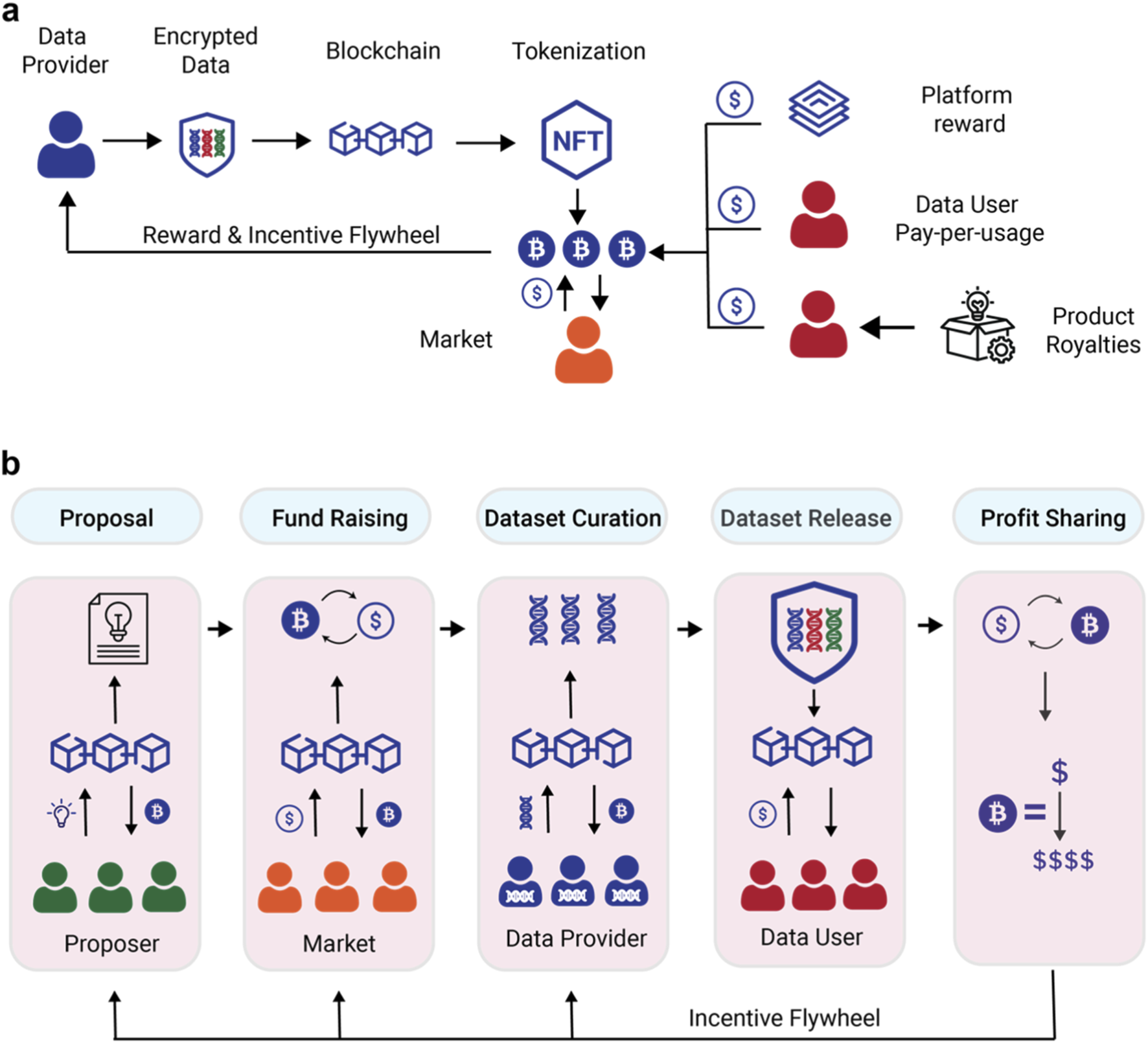
Identify a data labeling tool that supports blockchain integration. The platform should allow for API access to interact with smart contracts, enabling the automatic distribution of tokens upon label submission. Look for existing architectures like Decentralized Data Labeling Platforms (DDLP) that have been tested in academic or hackathon environments.

Write and deploy an ERC-20 token contract on your chosen blockchain network. This contract will define the total supply and the logic for rewarding annotators. Ensure the contract includes functions for minting rewards and transferring tokens to user wallets based on verified contributions. Reference official Ethereum documentation for secure contract deployment practices.
Integrate the labeling interface with user wallets using standard web3 libraries. Annotators should connect their wallets to view their token balance and submit labels. Implement a verification workflow where labels are checked before tokens are released from the smart contract. This step ensures that only high-quality, verified data triggers the incentive mechanism.
Define quality metrics and token rewards
To align token incentives with data quality, you must move beyond flat payment structures. Static rewards pay the same amount regardless of output, which encourages speed over accuracy. Dynamic smart contract logic changes the reward amount based on verified data quality, ensuring that higher accuracy yields greater compensation.
This approach transforms the incentive layer of the blockchain from a simple payment rail into a quality control mechanism. Smart contracts automate payment distribution based on predefined conditions, creating a system where token-based rewards directly incentivize high-quality work.
Compare reward models
Choosing between static and dynamic models determines how your labeling pipeline behaves under pressure. Static models are predictable but vulnerable to low-quality submissions. Dynamic models require more complex smart contract logic but produce superior training data.
| Feature | Static Rewards | Dynamic Rewards |
|---|---|---|
| Payment Structure | Fixed amount per label | Variable based on quality score |
| Verification | None or manual audit | Automated smart contract logic |
| Incentive | Speed and volume | Accuracy and consistency |
| Complexity | Low | High |
Implement dynamic logic
The core of this system is the smart contract. It must evaluate each submission against your quality metrics before releasing tokens. If a label passes verification, the contract releases the base reward. If it fails, the reward is reduced or withheld entirely.
This method ensures that participants are financially motivated to provide accurate data. As noted in industry analysis, Web3 can dynamically adjust rewards based on data quality, distributing profits instantly while maintaining high standards. This alignment reduces the need for expensive post-hoc auditing.
Set clear metrics
Define your quality metrics before writing any code. Common metrics include inter-annotator agreement, precision, and recall. These metrics must be quantifiable so the smart contract can evaluate them automatically. Without clear metrics, the dynamic logic cannot function effectively.
Use a combination of automated checks and human review to establish a baseline. Once the baseline is set, the smart contract can enforce the rules consistently. This creates a trustworthy environment where labelers know exactly how to maximize their earnings.
Onboard and manage annotators
Token-Incentivized Data Labeling works best as a clear sequence: define the constraint, compare the realistic options, test the tradeoff, and choose the path with the fewest hidden costs. That order keeps the advice usable instead of decorative. After each step, pause long enough to check whether the recommendation still fits the reader's actual situation. If it depends on perfect timing, unusual access, or a best-case budget, include a simpler fallback.
Audit data quality and token flows
Verifying the integrity of labeled data and ensuring transparent token distribution prevents fraud and gaming in decentralized labeling systems. Without rigorous auditing, bad actors can exploit sybil attacks or submit low-quality annotations to harvest rewards.
Verify data integrity
Start by validating the consistency of labeled data against ground truth sets. Implement automated checks to flag anomalies, such as contradictory labels or statistically improbable submission patterns. Cross-reference annotations with multiple independent labelers to ensure consensus before data enters the training pipeline.
Audit token distribution
Token distribution must be transparent and immutable. Use smart contract logs to verify that rewards are sent only to addresses that have completed verified tasks. Ensure that the incentive layer correctly rewards participants for securing the network and validating transactions, as outlined in blockchain incentive structures [1]. This prevents double-spending and ensures that rewards correlate directly with verified labor.
Prevent sybil attacks
Sybil attacks occur when a single entity creates multiple fake identities to claim rewards. Mitigate this by implementing identity verification protocols or proof-of-humanity checks before allowing users to participate in the labeling pool. Combine this with on-chain reputation systems to penalize addresses with poor historical performance.
Key consideration: Avoid sybil attacks in token distribution by requiring unique, verifiable identities before granting access to the labeling pool.
Establish audit trails
Maintain a complete, immutable record of every labeling action and token transfer. This audit trail should include timestamps, worker IDs, task IDs, and reward amounts. Regularly review these logs to detect irregularities, such as sudden spikes in submissions from a single address or patterns that suggest coordinated gaming.
[1] https://zebpay.com/in/blog/what-are-the-different-layers-of-blockchain
FAQ: Token-Incentivized Data Labeling
How does data labeling work?
Data labeling annotates raw data with meaningful tags, providing the context and categorization machine learning models need to interpret information effectively. In a token-incentivized system, this process is crowdsourced to a decentralized network of contributors who earn rewards for submitting high-quality annotations.
What is the incentive layer of the blockchain?
The incentive layer is responsible for rewarding participants, such as validators or labelers, for securing the network and validating transactions. Through token distributions, this layer ensures contributors act honestly and maintain the integrity of the labeled dataset, aligning their economic interests with data quality.
How are token rewards distributed for data labeling?
Rewards are typically distributed via smart contracts that automatically verify the quality and completeness of submitted labels. Contributors receive tokens based on predefined metrics, such as accuracy against ground truth or consensus among multiple annotators, ensuring payment is tied directly to verified output.
What are the benefits of using tokens for data labeling?
Token incentives can expand the talent pool beyond traditional freelancers by offering global, permissionless access to labeling tasks. This model often reduces costs and increases speed, as contributors are motivated by immediate, transparent rewards rather than delayed traditional payments.
No comments yet. Be the first to share your thoughts!