
Defining token-incentivized data labeling
Token-incentivized data labeling is a decentralized framework for training artificial intelligence models that replaces traditional human-in-the-loop workflows with blockchain-based economic mechanisms. Unlike conventional crowdsourcing platforms where centralized entities manage quality assurance and payout distribution, this model leverages smart contracts to automate the entire lifecycle of data annotation. The system creates a trustless environment where data contributors, often referred to as labelers, are compensated directly in cryptocurrency tokens for their precise work.
The core distinction lies in the incentive layer. Traditional labeling platforms operate on a fiat-based, hierarchical structure that introduces friction through middlemen and opaque quality metrics. In contrast, token-incentivized systems use ERC-20 tokens or similar cryptographic assets to align the economic interests of labelers with the project’s need for high-fidelity data. As noted in IEEE research on Decentralized Data Labeling Platforms (DDLP), these token incentives provide a mechanism for developers and researchers to access a global workforce without the administrative overhead of traditional employment or contractor management [src-4].
This structure ensures that the quality of the training data is directly tied to the value of the token reward. Labelers are incentivized to perform accurate annotations because their compensation is often escrowed in smart contracts and released only upon verification of the work’s quality, which may involve consensus mechanisms among peer labelers or automated validation tools. This eliminates the need for a central authority to audit every label, reducing costs and increasing the scalability of AI training datasets. The result is a transparent, auditable ledger of data provenance that enhances the reliability of the resulting AI models.
Why AI models need decentralized labels
The traditional data labeling industry faces a structural failure that threatens the reliability of large language models. Centralized platforms rely on a small, expensive workforce, creating a bottleneck that drives up costs while limiting dataset diversity. This scarcity forces developers to compromise on quality, resulting in models trained on narrow or biased data distributions. The economic friction of traditional outsourcing makes continuous, large-scale refinement financially unviable for most projects.
Decentralized data labeling resolves these inefficiencies by treating annotation as a permissionless, incentive-aligned activity. By distributing tasks across a global network of contributors, the system eliminates the single points of failure inherent in centralized pipelines. This approach democratizes access to data creation, allowing models to ingest varied, real-world examples that reflect complex human contexts rather than artificial, controlled environments.
The mechanism relies on cryptographic verification and token rewards to ensure accuracy without centralized oversight. Contributors are compensated for correct labels, while malicious actors face economic penalties through slashing mechanisms. This creates a self-correcting quality assurance layer where the financial incentive to act honestly outweighs the benefit of submitting poor data. The result is a trustless environment where data quality is mathematically verified rather than administratively enforced.

IEEE research confirms that ERC-20 token incentives provide a scalable framework for decentralized data labeling, offering a trustless environment for developers and researchers to access high-quality training data [[src-serp-1]]. This shift from administrative oversight to cryptographic verification represents a fundamental change in how AI infrastructure is built, ensuring that the models of 2026 are trained on data that is both abundant and rigorously validated.
Real-world platforms using token rewards
The shift from centralized data annotation to decentralized, token-incentivized workflows is no longer theoretical. Several platforms have already deployed on-chain reward mechanisms to solve the scalability and quality control issues plaguing traditional AI training data. These systems treat data labeling as a financial instrument, where accuracy is verified through cryptographic proofs and rewarded with native tokens.
Deano: Tokenized Annotation Infrastructure
Deano operates as a decentralized annotation layer where contributors are compensated with $DAN tokens for verified labeling tasks. The platform utilizes a quality assurance mechanism that ties payouts to the consistency of an annotator’s work relative to a consensus group. This structure aligns the economic interests of the labeler with the data provider; higher accuracy yields higher token rewards, reducing the need for expensive human-in-the-loop oversight. The system is designed to be permissionless, allowing anyone with internet access to contribute to AI training datasets while earning crypto assets.
Sapien: Gamified On-Chain Labeling
Sapien has raised significant venture capital to build a "gamified" data labeling experience that leverages blockchain-based rewards. By tokenizing the annotation process, Sapien incentivizes users to complete complex labeling tasks—such as image segmentation or text classification—through a transparent, on-chain ledger. The platform’s economic model relies on the scarcity and utility of its native token, ensuring that labelers are motivated not just by immediate payouts but by the long-term health of the data marketplace. This approach has attracted a global workforce seeking flexible, crypto-native income streams.
Comparative Platform Mechanics
The following table contrasts the primary incentive structures of leading tokenized data labeling platforms.
| Platform | Token Type | Payout Mechanism | Primary Use Case |
|---|---|---|---|
| Deano | $DAN (ERC-20) | Consensus-based accuracy verification | General NLP and text annotation |
| Sapien | Native Governance Token | Gamified task completion with on-chain verification | Complex image and multimodal data |
| Ocean Protocol | OCEAN | Data asset leasing with token royalties | Private dataset marketplaces |
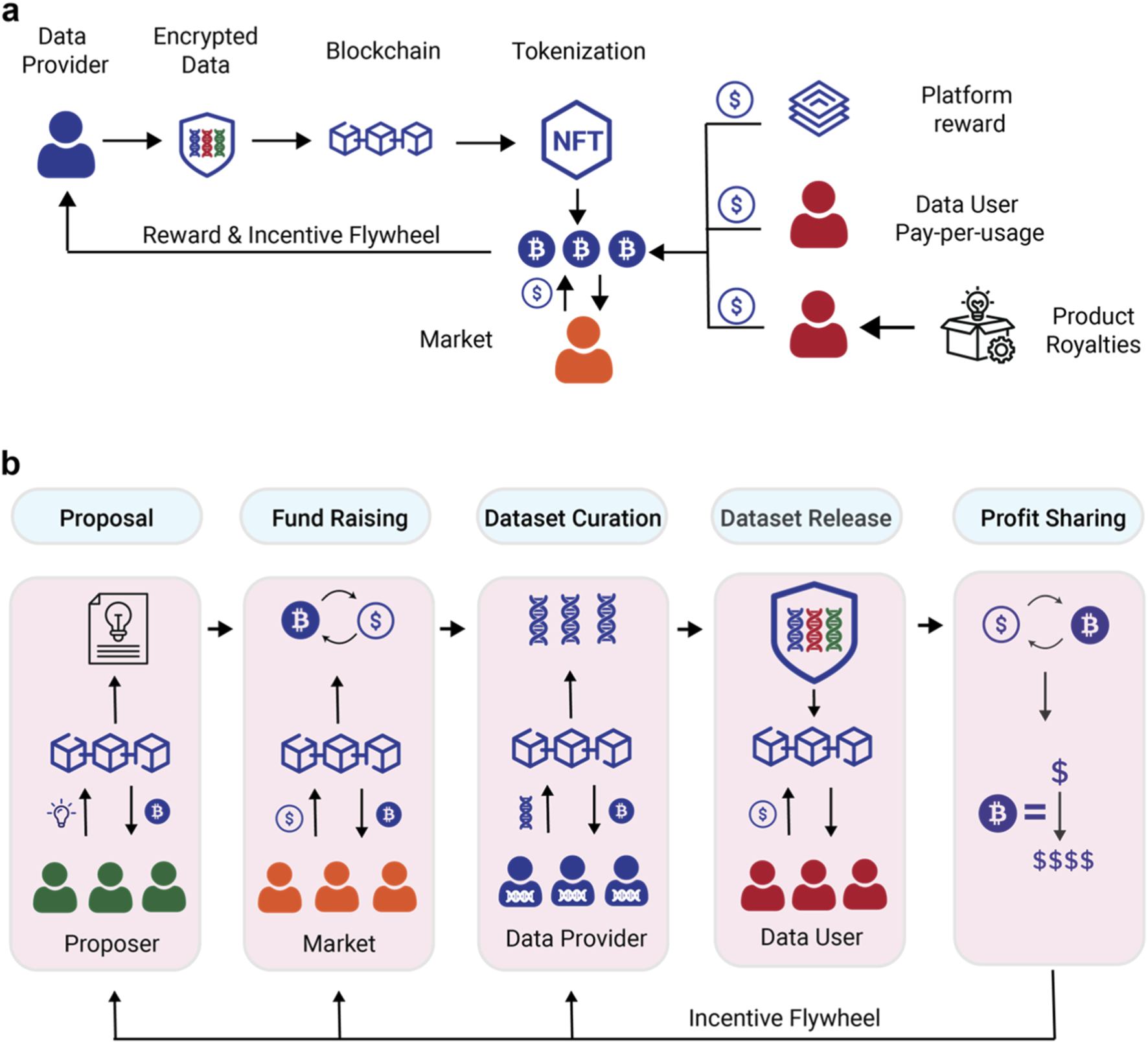
The 2026 cost model for LLM training
The transition to token-incentivized data labeling represents a structural shift in how large language models are fed. Traditional data annotation relies on centralized platforms that impose high overheads, limiting scalability and geographic diversity. By contrast, a token-based economy creates a global, distributed workforce where contributors are rewarded directly for the quality and rarity of their inputs.
This model fundamentally alters the economics of data acquisition. Instead of fixed hourly wages or per-task fees set by a single vendor, token incentives align contributor behavior with the model’s actual needs. High-quality, diverse data points that are difficult to find in standard datasets command higher rewards, creating a market-driven approach to data curation. This mechanism ensures that training data reflects a broader range of languages, dialects, and cultural contexts, reducing the bias inherent in homogenous datasets.
The result is a scalable workforce that operates with minimal friction. Contributors from underserved regions can participate without the barrier of complex onboarding processes or middlemen. This decentralization drives down the per-label cost while simultaneously increasing the volume and variety of available data. As the 2026 standard emerges, this economic efficiency becomes a competitive necessity for organizations aiming to train robust, unbiased AI systems.
Frequently Asked Questions About Token Labeling
Is data labeling a viable career path?
Data labeling offers a low-barrier entry into the AI economy, but its long-term viability depends on specialization. While basic annotation tasks are increasingly automated, human-in-the-loop verification for complex models remains in demand. Professionals who understand domain-specific nuances—such as legal or medical terminology—can command higher rates, though the market is shifting toward quality assurance over volume.
What is the incentive layer of the blockchain?
The incentive layer is the economic engine of a blockchain network. It rewards participants, such as validators or data contributors, with tokens for securing the network or providing essential services. In data labeling, this layer ensures that annotators are compensated fairly and transparently, aligning their financial interests with the accuracy and integrity of the training data they produce.
How does data labeling work?
Data labeling involves annotating raw data—such as images, text, or audio—to make it understandable for machine learning algorithms. In a token-incentivized model, this process is often decentralized. Contributors submit labeled datasets to a blockchain, where smart contracts verify the quality and distribute tokens automatically. This creates a verifiable audit trail for every piece of training data used in AI model development.
What are the incentives in blockchain?
Blockchain incentives generally fall into two categories: monetary and non-monetary. Monetary incentives include direct token rewards, staking yields, or governance rights. Non-monetary incentives involve reputation scores, access to exclusive data sets, or community status. In the context of AI training, these mechanisms are designed to regulate behavior, ensuring that participants act honestly and contribute high-quality data to the system.
No comments yet. Be the first to share your thoughts!